Using some of the video footage and photos taken by Paul Stevens, one of the team members, we put together a short 2 minute video in an attempt to capture the work of Global Health Relief.

Medical Relief work in the Philippines after Typhoon Haiyan.
Showing posts with label Philippines. Show all posts
Showing posts with label Philippines. Show all posts
Tuesday, January 7, 2014

Thursday, December 19, 2013
Maria
Today in our clinic I had the opportunity to care for a 10 year old girl Maria with an abscessed tooth. She had been in pain for about a month. She lost her mother and father in the horrendous Typhoon. Her aunt whose home was destroyed lost her two sons in the Typhoon has take her in and they are living in another sisters home. Maria was so thankful to have her tooth removed she gave me a kiss.
 What a tragic story for such a young life to experience. We prayed with her. There isn't a family that I have met since I have been here that hasn't been touched in such a horrific way. The Salvation Army has been wonderful in their grief counseling and spiritual ministry – they spent over an hour with this family alone.
 In our clinic today, we saw 78 medical patients and 24 oral surgery patients. The Salvation Army distributed over 1000 food relief bundles to families today as well.
For His glory,
Sam
 What a tragic story for such a young life to experience. We prayed with her. There isn't a family that I have met since I have been here that hasn't been touched in such a horrific way. The Salvation Army has been wonderful in their grief counseling and spiritual ministry – they spent over an hour with this family alone.
  In our clinic today, we saw 78 medical patients and 24 oral surgery patients. The Salvation Army distributed over 1000 food relief bundles to families today as well.
For His glory,
Sam
Wednesday, December 18, 2013
Winding Down in the Philippines

 A few nights ago Mirriam and I worked out the Excel update for everyone and we have had some good days with food distributions, immunizations and our medical/dental clinics. Mirriam had been very helpful in getting our daily schedule clarified.
 I plan to fly back to TN on December 28.
Dan has been a huge help and has done may projects. Speaking of projects, please tell Paul we are all much more comfortable and able to get some relief from the heat and humidity with his wonderful wiring – it is awesome and a real blessing to everyone.
Jeff, one of the nurses on the team was down a day – but responded to medication and an IV and is now feeling according to him 99.9% today.
Thank everyone for their prayers. I know that is what sustains us and supports us.
Have a blessed Christmas as you celebrate the Babe of Bethlehem, that was the Christ of the cross and our soon to come King.
Blessings my dear Brother, see you soon.
Dr. Sam Molind
Tuesday, December 17, 2013
Rain!
 Well, we ended up our time here with a bang. Instead of being soaking wet from sweat, it was a torrential downpour several times today with thunder and lightning. The local people thought it was a repeat of November 7th and the children were freaking out! I was drenched and standing in one to two inches of water all day inside the clinic. It stormed all day, but at least it cooled it down and was the coolest day we have had since I have been here. We lost one of the new team members to a GI bug in his first 24 hours here. I doubt he will make any clinics the next two days. The average age of the doctors here is probably 65 or older so it is not a young group. It will be nice to get home to our clean and dry place. We have been using a piece of cardboard for a bath mat in the bathroom.
 In the clinic today, we saw many wound abscesses due to injuries from nails and the debris. We saw children swimming in the ocean for the first time today until the storm came up. The local Buddhist group was handing out wool blankets yesterday which is the last thing I would want here. The people at the local Salvation Army church said they had 43 families in the 20x20 foot room with as many as ten people in a family as they weathered out the storm. People are putting up Christmas trees and making them out of scraps such as plastic bottles and decorating with anything they find to make an ornament out of. Looking forward to being home. I leave at 4 am in the morning to make the trek to Manila.
NOTE: We have one more team who will be in the Philippines until shortly after Christmas.
Monday, December 16, 2013
Nula Tula, No Paradise
 Living in NULA TULA has a nice ring to it but it is not paradise by any means. One thing bad about an iPAD is you are staring at your reflection while you waiting to boot up and the sight is not pretty at the moment. As we drove through Tacloban yesterday, I kept seeing signs TINDOG TACLOBAN! At first I thought this was some dude buying scrape, but then I found out it means STAND UP TACLOBAN!
As we went through the city there were 1000's of concrete houses with collapsed roofs, walls caved in, sometimes only a small piece of foundation left, or at times you would see the front of the house missing and then the back of the house buckled out and bowing from the force of the water hitting it.
 They are raising the official death count now, but the locals still do not believe it. Some of the locals said many were killed not only by drowning but by debris penetrating their bodies. I remember as a child someone bringing a 2X4 to school with a piece of pine straw penetrating through and through a piece of wood with such force that it did not even break the pine straw. We have to remember this typhoon was essentially a class 3-4 tornado that was massive. At the village where we have been the people are smiling and the children are happy and playing. People ask them why are you smiling? They say we're alive and are thankful .
 The sermon this morning was 3D -- 1. Divine warning 2. Divine promise 3. Divine dwelling. The people here have one room to cook, eat and sleep in. But they have the assurance of a Heavenly Mansion in the future and that keeps them going and happy despite the loss of everything.
I was reading that in disaster situations that a large number of mothers sell the medications of a sick child to feed the others. They also said 36% share their medications with others. Also, there is cultural problem with the fact they believe a little pill is for a little person and a big pill is for a big person.
Wednesday, December 11, 2013
Ministering in Leyte
 While the rest of the world and their media have moved on to other things, the people on this island of Leyte in the Philippines continue to patch together an existence. Each day as we
 drive the road to our health department assigned barangay (villages) we see signs of progress: a line of electric poles (imagine being without power for a month), a few less piles of brush in the street to veer around, several seaside tin roof shacks popping up in a day.
 The Salvation Army has some of their leaders here to figure out what to do for the next two years to help the Filipinos rebuild. Do they build houses? That is not their specialty. How long do they continue medical work with CMDA (our team)? How do they respond to the need without stifling the enterprise of individuals or creating dependence. These are not easy questions to answer, but we continue to encounter tough stories.
My new friend Major Bong is one of the most compassionate men I've ever met. He feels the pain of those he encounters and is constantly working to help. He carries packages of crackers around in case he meets someone hungry. He is always thinking about how to help. Join with Bong and me in praying for the needs of the people in this little corner of the world.
Dr. Bolthouse
Tuesday, December 10, 2013
An Inside Look at the Conditions in the Philippines
 I’m writing this brief report while sitting in the airport in Manila, Philippines on my way back from leading the first CMDA Global Health Relief team. At the invitation of the Salvation Army, our relief partner, I led the initial team of two other doctors and a logistician/photographer to the Philippines. We left on November 20, flew to Manila and met briefly with the Salvation Army (SA) national leadership at their headquarters before traveling south to Tacloban on the island of Leyte. It was the epicenter of the path of Typhoon Haiyan.
 We landed at the severely damaged airport on a peninsula that had been scrubbed shore to shore by the 15-foot storm surge. The U.S. military had bulldozed the debris off the runway, brought in a mobile radar unit and were managing the stacked up traffic of military planes and helicopters. The shell of the terminal was stripped of most of its roof and much of its concrete structure was damaged. Blown out window glass and water stood on the floor as we passed through the terminal to the parking lot.
 As we entered the city, our vehicle weaved its way down a single lane around huge piles of debris shoved to the side by a road grader. Too often, the pungent odor of decaying bodies, 10 days old and hidden under the rubble, penetrated through the laboring air conditioner. A large truck parked by the side of the road was half-full of black body bags still being loaded by searchers wearing masks, gloves and protective clothing.
The most deadly typhoon in recorded history left destruction everywhere—roofs blown off, palm trees snapped like twigs and every window blown out. Yet the tidal wave did the most damage. Entire ships stood in streets and cement block and poured concrete buildings were shattered by the wave’s power.
We arrive at a small SA Corp (church) in the north of the city, which had less damage. It was filled with 30 Filipino staff and three relief specialists from the Army’s international headquarters sleeping on its floors. As we stepped out of the air-conditioned vehicle, the sauna-like heat enveloped us and I began to profusely sweat. That wouldn’t stop, day and night for the next 13 days.
Out of space, the Salvation Army had just rented a damaged house across the street where we could lay out our sleeping pads and put up our mosquito nets as darkness enveloped us around 5:30 p.m. All four of us slept side by side in one small room. The nets were for more than flying insects as there were thumb size roaches and rats in the house. I was warned that the roaches will bite you on the eyelids, but the rats prefer your feet. We were coated in insect repellent day and night, but the swarm of mosquitoes were experts in finding any square centimeter left bare or in sucking blood out through any thin area of clothing during the day or where your skin touched the mosquito net at night.
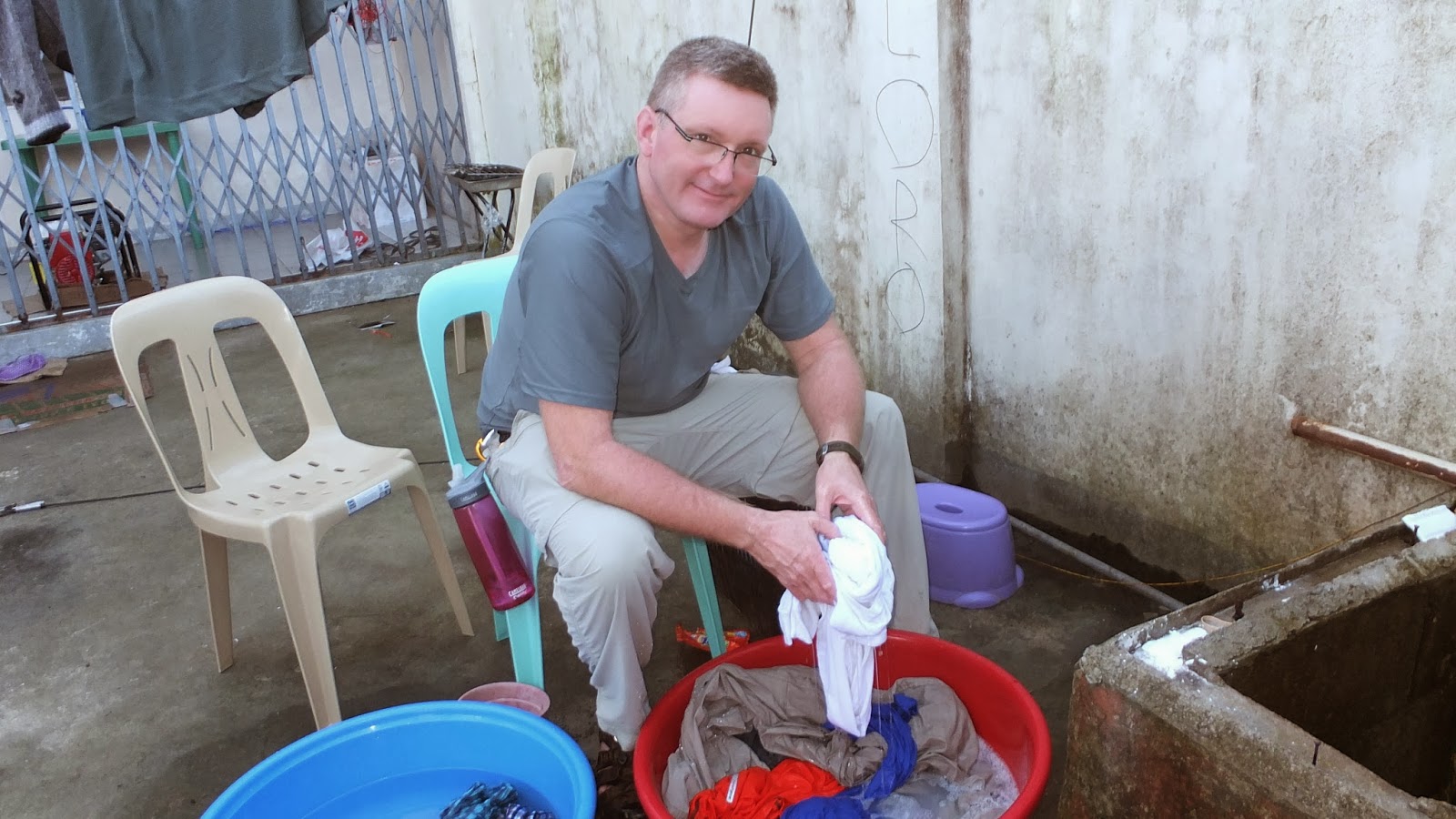
We “showered” with a dipper and a half-bucket of water drawn from a shallow “well” in the front yard just five feet from an open sewer on the side of the road. We were advised to keep our mouths shut when bathing to avoid amoeba infection. Then we immediately applied more bug spray before crawling under the netting in a pair of shorts. Only Ambien afforded sleep as we sweated through the night.
The “health cluster” led by the Philippine Ministry of Health assigned us the next day to help staff a district hospital in Baybay City on the other side of the island, but upon arriving after three to four hour drive, we found that a Chinese hospital ship had arrived in their port the day before and sent 40 of their doctors and nurses to commandeer our work site. Instead, we held a clinic at a church south of town, slept in a room above it and head back to Tacloban the next day, checking communities for medical needs as we drove.
All the easily accessible towns and hospitals are well covered, so we turned our attention to the barangays, villages far off the main road. We held daily clinics at unmanned community health centers or schools among devastated rice paddies and coconut groves. Almost every patient we saw had lost all or most of their small houses. Each had a story to tell. The few cars in the community were destroyed. Only a few motorcycles survived, but fuel was difficult to obtain.
By our second week, a follow-up GHR team of four doctors and three nurses arrived, while the doctors who originally accompanied me left on various days to return to their jobs. We added measles, Vitamin A and Polio vaccines for the children under five, often in the same room with a local midwife assisting with the injections. During all the medical treatments, there was also prayer with patients, a counseling site with a Salvation Army officer pastor and offer for prayer as they got their medicines from our two suitcases and a trunk pharmacy.
A couple of days ago, I flew out of Tacloban as Dr. Sam Molind and two others arrived in Manila. Together, we met with SA officials and planned. It will take another month or so for their medical system to recover. Lord willing, we will be helping until mid-January.
Pray for Sam, those working with him now and those coming over the next weeks. The living conditions are very difficult and the chance for disease is high. We have already had to give IV rehydration to two SA staff and one other was in the hospital overnight. Pray for strength, wisdom and safety. Driving in the Philippines is a game of chicken as people move out of their lanes to pass slow moving motorcycles and bikes.
We now have our first Global Health Relief joint project under our belt, and the Salvation Army’s international health coordinator is enthusiastic about CMDA’s continued partnership in other crises.
It’s been a very long two weeks, but it was worth it. Helping people out of the unexpected ditch of suffering and despair is not easy, but we need to be there. It is what Christ would do.
Monday, December 9, 2013
December 9 Tabu

The immunization side saw 60 while the medical team saw 97. None were in critical condition. Dental saw 21 patients removing 45 teeth.
Because the medical side finished well before dental and there were two vehicles, one group went home early but the second group got lost on the way back resulting in some anxiety on those already back at base camp.
It was also learned today that Filipinos (both our patients and local volunteers) expect a 12 PM lunch break and so we will be managing the flow in a way to accommodate this need in the days ahead.
Please keep praying for the Filipinos and for those ministering to them.
Tuesday, December 3, 2013
Photo Journal
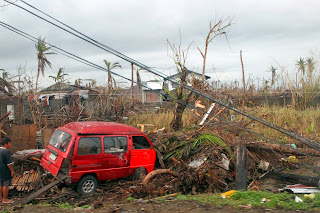
Editors throughout time have said a picture is worth a thousand words. Here are some photos taken by Paul Stevens who is traveling with the scout team.




Wednesday, November 27, 2013
Tough living conditions
We are hot! Yes, the temperature is near one hundred and the
humidity is close to 100 percent. We had three hard rains, yesterday flooding
the rice paddies that surrounded our work site, leaving huge puddles on the
gravel road.
Secular relief organizations have stayed in sight of the
main coastal road winding out of Tacloban, distributing food, tarps and some
medical care. The hot zone now is in the small villages among the farmers whose
houses have been blown down, their coconut groves decimated and their rice
paddies have lost over half their harvest.
We made contact with the local mayor of a small central
village who eagerly welcomed us. There is a small, one room health center at the
edge of town where we set up a triage table staffed by Pami Ellis, a missionary
kid nurse midwife. Her knowledge of the language and rapport with the local
people break down all barriers.
Stephen Euler and I had setup to see patients inside at two
tables with local teachers acting as translators. The schools are closed until
at least January. Russ, a U.S. born
young Filipino doctor, handled the pharmacy, IV’s and injections.
The patients are quite sick – diarrhea, fevers, worm
infestations, urinary tract infections, otitis media, an untreated harelip, a
large cyst in the abdomen, a huge goiter and lots of hypertension. Underlying
those problems are anxiety, insomnia and “their story”; where they are sheltered,
whether a family member died and for almost all of them, their house is gone.
We worked hard, not stopping for lunch until late, and then we
started working again. The two of us saw 70 patients in about six hours. There
is a curfew and it gets dark around 5:30 so we finished, packed and loaded up
our medicines. We also helped a mother, her pale, floppy baby with chronic
diarrhea and anemia and older child into the car to take with us. We detoured
on the way home and drove out to the devastated airport where the Australian
government has set up a mobile hospital. We arrived after dark, thrilled to
find their ER was empty of patients, and they could take the baby in
immediately.
The hospital used to be in the hot zone in the early days,
but now those needs are in the community. So as I write this note, we are
bouncing down the coast road between the devastation on land and the beautiful
sea, heading to another community where people desperately wait for help.
Today, God has provided us through your prayers and support.
Dave
Monday, November 25, 2013
Sunday
On Sunday, instead of a day of rest, we had a long day of travel and work in the hot humid heat. We got up at 4:40 a.m. to pack up our camping gear, ate a boiled egg, half a hot dog and a piece of bread under the tarp awnings put up out from the side of the small Salvation Army Church in Tacloban. The poured concrete church building was far enough away from the 15 ft. surge that devastated the city of Tacloban that it only had wind damage. This is command Central for the Salvation Army for teams handing out water and cookies at the airport’s partially demolished terminal and food to the people in the city.
At 6 a.m. we loaded our medicines, camping supplies and boxes of water into the back of a covered truck with benches on each side. By the time we squeezed in, it was packed to the ceiling in the front of the cab, under the seats and then down the central isle and between our legs. We headed out of town amongst the death and destruction of Tacloban. Only a few badly damaged concrete walls still stand as you get closer to the sea. Concrete power poles are laid over on their sides. The storm surge reached into the second floors of buildings; blew out windows and left bodies tangled in electric lines 20 feet off the ground. An intact roof is rarer than hen’s teeth after the 230 mile an hour peak winds of Typhoon Yolanda swept ceramic tiles and corrugated roofing away.
All the same, the roads are congested with people on bicycles, motorcycles and a few cars. We have to stop 3 to 4 times for huge front end loaders starting the endless job of shoveling up debris to dump into large dump trucks. It is an endless job. Along the road, people salvage metal roof pieces out of rubble for makeshift shelter construction.
We don’t get out of town before our Salvation Army driver realizes the permit to get gasoline is not in the vehicle, so we pull over to the side of the road and send word for someone to bring it on a motorbike. The cab is like a sweatbox as we wait for an hour. Then we thread our way through, heading south towards Baybay City. On the way we pick up Pami, a missionary midwife, and Russ, a US raised Filipino doctor who is now a missionary to his own country. They work in Manila, but have come to help.They are fluent in the local language and have invaluable knowledge of the country. Along with Dr. Cete, a Salvation Army doctor; Steve, Nadir and Paul make up the rest of our team. Steve Euler is an internist working with Christ Community Health in Memphis; Nadir is an Egyptian American doctor who has returned to reach his own people and Paul Stevens, my brother is our photographer.
It takes us six hours to travel 70 kilometers which included a stop to stretch our legs and a detour off the main road looking for gas. All the electricity on the island came from Tacloban so Baybay City is powerless, except for a generator which is sporadically sending water to sections of the city. We stop and get meat and rice at a local restaurant and then head to our destination.
This area, on the leeward side of the island behind high mountains, wasn’t hit as bad as Tacloban; but there are still needs so we set up in the Salvation Army Corp (church) three hours before dark and see about 40 grateful parents and children for trauma, anxiety, respiratory illnesses and those who just can’t get their medicines for their chronic diseases. Without electrify, we meet by candlelight to plan the next day, eat a delicious meal of rice, fish and chicken made by women in the community.
Up early, we see more patients before packing up to find another site. The government health briefing the night before we left had given us a couple of places to check out. One was a district hospital, but when we pull up, we learn the Chinese arrived the day before with a large team. The needs seem to be off the main road so we thread our way through rice paddies and unpaved roads checking out local communities. By the end of the day, we have a plan and have made promises to return to a couple of places the next day to see patients.
Already, two weeks after the typhoon relief groups are beginning to head home. An Australian team said they are leaving tomorrow. Other relief groups will follow quickly. The need for medical help will increase and the resources to meet them will be few. It will take years to rebuild and recover. Global Health Relief will be here after most are gone because the local medical system will take months to recover. Many of their personnel lost their homes and some lost their family members in the storm. We are not here to grab headlines but serve. Just like Jesus would.
Dave
At 6 a.m. we loaded our medicines, camping supplies and boxes of water into the back of a covered truck with benches on each side. By the time we squeezed in, it was packed to the ceiling in the front of the cab, under the seats and then down the central isle and between our legs. We headed out of town amongst the death and destruction of Tacloban. Only a few badly damaged concrete walls still stand as you get closer to the sea. Concrete power poles are laid over on their sides. The storm surge reached into the second floors of buildings; blew out windows and left bodies tangled in electric lines 20 feet off the ground. An intact roof is rarer than hen’s teeth after the 230 mile an hour peak winds of Typhoon Yolanda swept ceramic tiles and corrugated roofing away.
All the same, the roads are congested with people on bicycles, motorcycles and a few cars. We have to stop 3 to 4 times for huge front end loaders starting the endless job of shoveling up debris to dump into large dump trucks. It is an endless job. Along the road, people salvage metal roof pieces out of rubble for makeshift shelter construction.
We don’t get out of town before our Salvation Army driver realizes the permit to get gasoline is not in the vehicle, so we pull over to the side of the road and send word for someone to bring it on a motorbike. The cab is like a sweatbox as we wait for an hour. Then we thread our way through, heading south towards Baybay City. On the way we pick up Pami, a missionary midwife, and Russ, a US raised Filipino doctor who is now a missionary to his own country. They work in Manila, but have come to help.They are fluent in the local language and have invaluable knowledge of the country. Along with Dr. Cete, a Salvation Army doctor; Steve, Nadir and Paul make up the rest of our team. Steve Euler is an internist working with Christ Community Health in Memphis; Nadir is an Egyptian American doctor who has returned to reach his own people and Paul Stevens, my brother is our photographer.
It takes us six hours to travel 70 kilometers which included a stop to stretch our legs and a detour off the main road looking for gas. All the electricity on the island came from Tacloban so Baybay City is powerless, except for a generator which is sporadically sending water to sections of the city. We stop and get meat and rice at a local restaurant and then head to our destination.
This area, on the leeward side of the island behind high mountains, wasn’t hit as bad as Tacloban; but there are still needs so we set up in the Salvation Army Corp (church) three hours before dark and see about 40 grateful parents and children for trauma, anxiety, respiratory illnesses and those who just can’t get their medicines for their chronic diseases. Without electrify, we meet by candlelight to plan the next day, eat a delicious meal of rice, fish and chicken made by women in the community.
Up early, we see more patients before packing up to find another site. The government health briefing the night before we left had given us a couple of places to check out. One was a district hospital, but when we pull up, we learn the Chinese arrived the day before with a large team. The needs seem to be off the main road so we thread our way through rice paddies and unpaved roads checking out local communities. By the end of the day, we have a plan and have made promises to return to a couple of places the next day to see patients.
Already, two weeks after the typhoon relief groups are beginning to head home. An Australian team said they are leaving tomorrow. Other relief groups will follow quickly. The need for medical help will increase and the resources to meet them will be few. It will take years to rebuild and recover. Global Health Relief will be here after most are gone because the local medical system will take months to recover. Many of their personnel lost their homes and some lost their family members in the storm. We are not here to grab headlines but serve. Just like Jesus would.
Dave
Pray
A short note from Dr. David Stevens:
Leaving Baybay for another site. Extremely hot. Saw about 100 patients late afternonn and this morning. Very few really sick patients, upper respiratory infections, people out of blood pressure medicines and small wounds from the typhoon.
Very tiring, little sleep due to heat for all. Got a basin "shower" last night.
Pray.
Dave
Leaving Baybay for another site. Extremely hot. Saw about 100 patients late afternonn and this morning. Very few really sick patients, upper respiratory infections, people out of blood pressure medicines and small wounds from the typhoon.
Very tiring, little sleep due to heat for all. Got a basin "shower" last night.
Pray.
Dave
Saturday, November 23, 2013
At the Cebu airport, Philippines
 The
GHR assessment team just finished our 5th flight and is in Cebu, Philippines,
the second largest city. It was largely undamaged. One more flight to reach the
center of the devastation in Tacloban on Leyte Island lying to the east.
The
GHR assessment team just finished our 5th flight and is in Cebu, Philippines,
the second largest city. It was largely undamaged. One more flight to reach the
center of the devastation in Tacloban on Leyte Island lying to the east.
Here
at the airport, you would hardly know there is a huge disaster zone just 45
minutes away by air. The signs advertise local vacation resorts; families are
traveling home with children and feeding them ice cream cones; business men are
going about their business. But salted among the crowds are UK navy officers, a
young guy with “UN Logistician” boldly lettered on the back of his vest and a
guy carrying a large TV camera. The rest of our day will be anything but
usual.
Incongruously,
as we anticipate the tragedy ahead and eat a hasty hamburger, the Detroit
Pistons are playing the Atlanta Hawks live on the TV in the waiting area. The
world goes on as people suffer, die, mourn and worry about rebuilding their
lives after the largest typhoon in recorded history.
The
Salvation Army, our partner, has done a wonderful job facilitating pit
logistics. The local Corp Commander and his wife met us on arrival and helped
us get our eight large bags of camping equipment, dehydrated food and medicines
checked through at no charge. They will do the same for our GHR teams that will
follow.
 By
tonight, we will know much more and be cranking up our BGAN satellite mobile
link to send a report to answer as many questions as possible - How big should
be the teams that follow? Are surgeons needed? Is there electricity? What about
water and shelter? What medical needs must be addressed? Which medicines and
supplies should we bring … and many more.
By
tonight, we will know much more and be cranking up our BGAN satellite mobile
link to send a report to answer as many questions as possible - How big should
be the teams that follow? Are surgeons needed? Is there electricity? What about
water and shelter? What medical needs must be addressed? Which medicines and
supplies should we bring … and many more.
One
question we have already answered. We know our greatest need – it’s prayer! Will
you stop right now and meet that need? We would be unwise to go on without
it.
Subscribe to:
Posts (Atom)